Life skills training helps adults with intellectual disabilities build independence, confidence, and community participation, supported by tailored NDIS programs.


Life skills are more than just practical abilities — they’re the foundation for living with independence, confidence, and dignity.
For adults with intellectual disabilities, learning these skills can open new opportunities, from managing daily tasks to engaging in the community.
With the right support, including NDIS-funded programs, skill-building becomes not just possible, but empowering.
What Are Life Skills and Why Are They Important?
Life skills are the abilities that help us navigate daily life — from brushing our teeth in the morning to cooking dinner, from managing a budget to talking with friends.
For most people, these abilities develop naturally over time.
But for adults with intellectual disabilities, learning these skills may require extra time, guidance, and hands-on practice.
The importance of life skills training cannot be overstated. It supports:
Greater independence — reducing reliance on carers or family members.
Confidence building — helping people believe in their own abilities.
Social inclusion — making it easier to participate in community life.
Better quality of life — empowering people to make choices and take control of their daily routines.
Understanding Intellectual Disabilities and Life Skills
An intellectual disability is a condition that affects a person’s ability to learn, reason, problem-solve, and adapt to everyday life.
It can range from mild to profound and may be caused by genetic conditions, illness, or brain injury.
For someone with an intellectual disability, life skills might look a little different. For example:
Cooking might involve learning safe knife handling, using a microwave, or following simple recipes.
Financial management might start with recognising coins and notes before moving on to budgeting.
Social skills might involve practising greetings, making eye contact, and learning to take turns in conversation.
The key is personalisation — tailoring skill development to the individual’s abilities, needs, and goals.
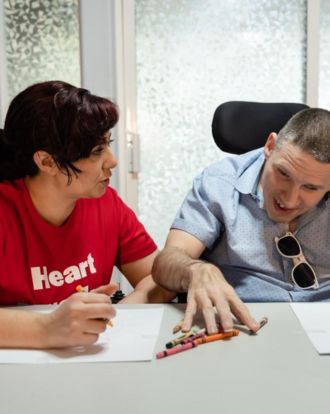
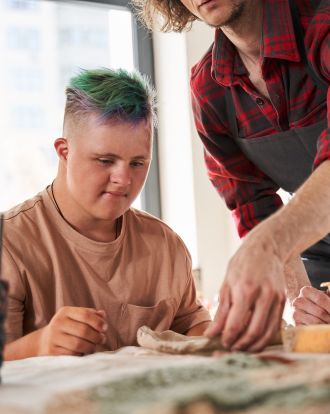
Essential Life Skills for Adults with Intellectual Disabilities
Life skills cover a wide range of areas. In the context of intellectual disabilities, here are the core categories:
1. Self-Care Skills
Basic hygiene, dressing, grooming, and preparing simple meals form the foundation of daily independence.
Learning these skills boosts self-esteem and reduces dependence on others for basic needs.
2. Communication Skills
Communication is more than just words — it’s expressing thoughts, feelings, and needs.
Some people may communicate verbally, while others may rely on AAC (Augmentative and Alternative Communication) devices, sign language, or picture boards.
Training focuses on helping individuals use the methods that work best for them.
3. Social Skills
These skills make it easier to connect with others and form friendships.
Examples include understanding personal space, showing respect, listening actively, and engaging in group activities.
4. Daily Living & Home Management
This covers cooking, cleaning, grocery shopping, laundry, and basic home safety.
Even small improvements in these skills can greatly improve a person’s independence.
5. Financial Literacy
Managing money can be challenging, but it’s an important step toward independence.
Skills include recognising currency, budgeting, paying bills, and understanding the value of money.
6. Community Participation
This includes using public transport, navigating the local area, visiting shops, and attending community events.
It’s about building confidence outside the home and reducing social isolation.
How the NDIS Supports Life Skills Development
The National Disability Insurance Scheme (NDIS) provides funding for supports that help people with disabilities reach their goals — and life skills training is a key part of that.
Under the Capacity Building category, NDIS funding can cover:
Personal development programs
Support workers to assist with skill learning
Social and community participation activities
Communication and social skill-building programs
Access to technology, such as AAC devices
The beauty of the NDIS is its flexibility. Plans are tailored to the individual’s needs and goals, meaning that one person might receive funding to learn cooking skills, while another focuses on using public transport or managing money.
Training Approaches That Make a Difference
Not all life skills programs are the same. The most effective ones share a few key elements:
Individualised Learning Plans
Training is adapted to the person’s abilities, learning style, and goals.
Hands-On Experience
Real-life practice in natural environments is far more effective than theoretical lessons.
Technology Integration
AAC devices, mobile apps, and visual aids can make learning easier and more engaging.
Peer Learning Opportunities
Group activities allow people to practise social skills and learn from each other.
Positive Reinforcement
Encouragement and recognition of progress help build motivation and self-esteem.
Benefits Beyond the Skills Themselves
Life skills training is about more than just learning practical tasks.
It also supports:
Increased independence — reducing reliance on support workers for everyday tasks.
Stronger social connections — making it easier to form and maintain relationships.
Improved emotional wellbeing — feeling capable and in control.
Better opportunities — opening the door to volunteering or paid employment.
Role of Families and Carers in Skill Development
Families and carers play a crucial role in reinforcing skills learned during training.
They can help by:
Creating a supportive home environment
Encouraging daily practice
Celebrating small milestones
Maintaining consistency between home and training sessions
Partnership between trainers, support workers, and families ensures the best outcomes for the individual.
Getting Started with Life Skills Training Under the NDIS
Here’s a step-by-step guide:
Discuss Goals – Talk about what skills the person wants to develop, such as cooking, budgeting, or travelling independently.
Review NDIS Plan – Check if the plan includes Capacity Building supports and whether life skills training is covered.
Choose the Right Provider – Look for a provider with experience in intellectual disabilities and a personalised approach.
Start Small – Focus on one or two skills at a time to avoid overwhelm.
Track Progress – Keep a record of improvements to help adjust the plan and celebrate successes.
Life skills training gives adults with intellectual disabilities the tools they need to lead more independent, confident, and fulfilling lives.
When combined with the flexibility and funding support of the NDIS, these programs can be life-changing.
It’s not about rushing progress — it’s about building at a pace that works for the individual, celebrating every milestone, and ensuring they have the skills to thrive in their own way.
Book a Consultation
It’s easy and free!