Explore unique challenges faced by people with disabilities in rural versus urban settings and how tailored support bridges these gaps.

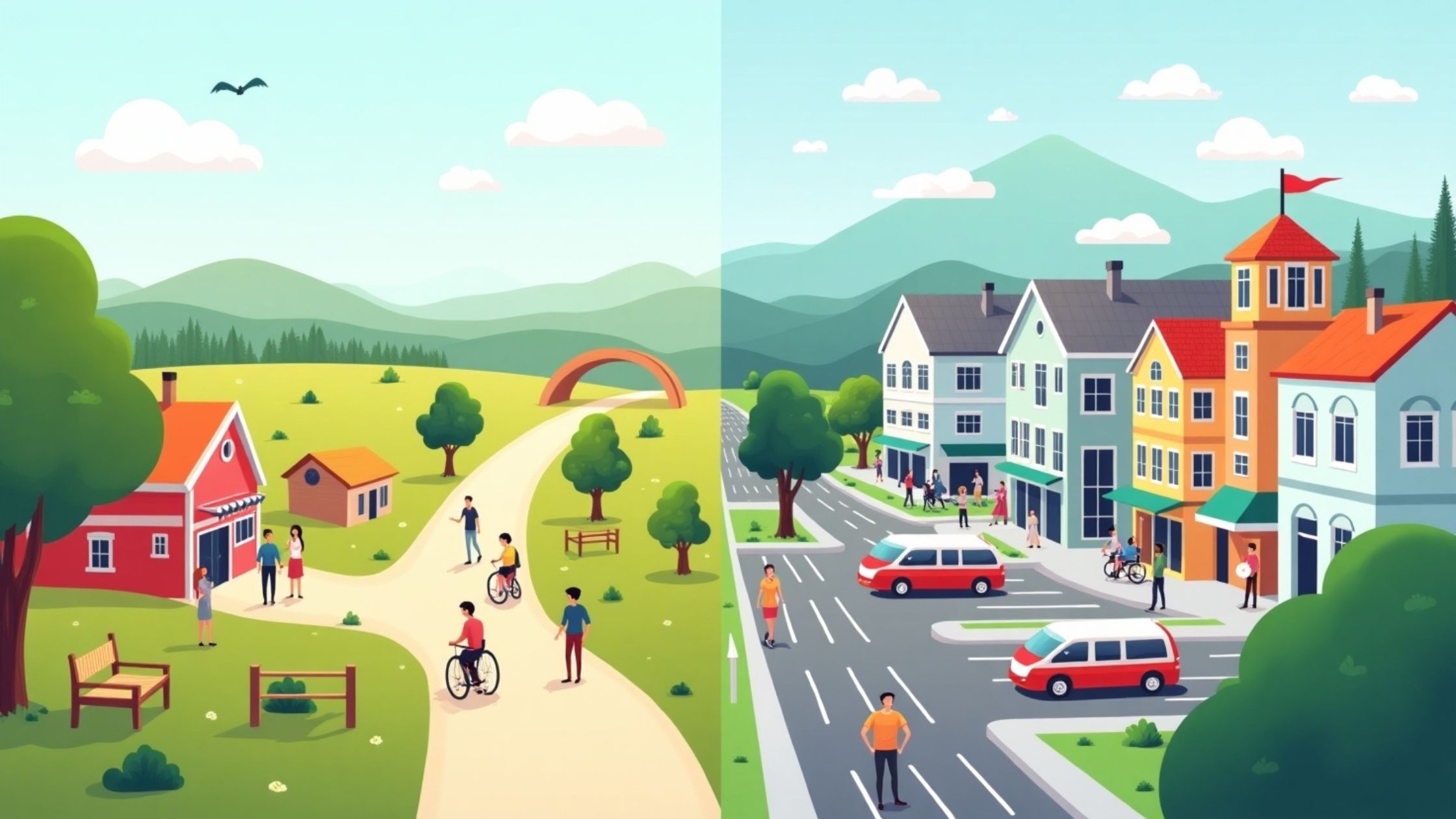
Living with a disability presents unique challenges, but the environment—whether a bustling city or a quiet rural town—can significantly influence those challenges. Barriers to accessibility, services, and community inclusion often vary greatly depending on location. Understanding these differences plays a crucial role in developing effective support systems and policies that meet the needs of people with disabilities everywhere.
Types of Barriers Faced by People with Disabilities
People with disabilities face a variety of obstacles that can be physical, social, or economic in nature. Physical barriers include inaccessible buildings, lack of reliable transportation, and limited healthcare facilities. Social barriers often involve stigma, insufficient awareness, or restricted social networks, which can lead to isolation. Economic challenges arise due to fewer employment opportunities and financial limitations, which impact access to essential resources and services. Altogether, these obstacles influence a person’s independence, quality of life, and sense of belonging.
Barriers in Urban Settings
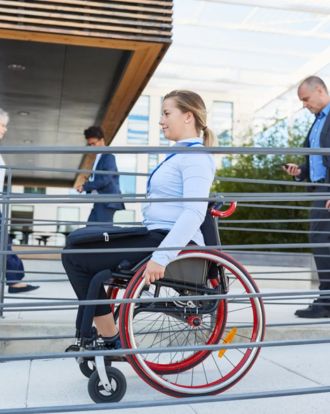
In urban environments, the availability of services and infrastructure is typically greater; however, these settings still pose unique challenges. For instance, crowded public spaces and high living costs can make daily life difficult for people with disabilities. Additionally, navigating busy streets and finding affordable, accessible housing may be a constant struggle.
On the other hand, cities often provide better access to healthcare facilities, specialist services, and public transportation designed to accommodate various disabilities. Furthermore, urban areas offer more employment options, social programs, and advocacy groups. These resources can help people with disabilities engage more fully in community life. Nevertheless, the fast-paced and sometimes impersonal nature of urban life can result in feelings of exclusion or anonymity.
Barriers in Rural Settings
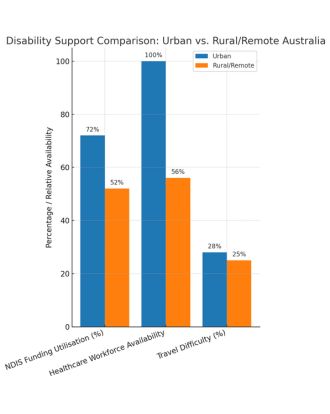
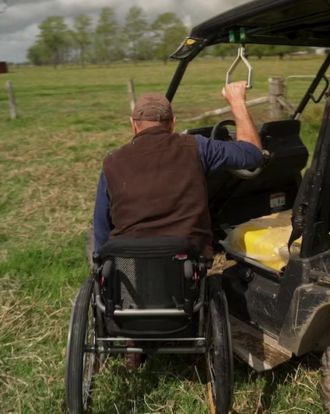
Conversely, rural areas present a different set of challenges. Residents often experience limited access to healthcare, particularly specialist care, which may require traveling long distances. Public transportation options tend to be scarce or nonexistent, exacerbating mobility issues. Infrastructure such as accessible sidewalks and public buildings may also be lacking or poorly maintained.
Despite these difficulties, rural communities can provide strong informal support networks through family and neighbours. Social isolation remains a concern due to fewer disability-specific programs and social groups. Economic opportunities are limited compared to cities, making independent living more challenging for people with disabilities.
How Technology Bridges the Gap Between Rural and Urban Disability Barriers
In recent years, technology has played a crucial role in reducing some of the divides between rural and urban settings. For example, telehealth services allow rural residents to consult healthcare professionals remotely, saving both time and travel costs. Assistive technologies, such as screen readers, hearing aids, and communication apps, help overcome physical and social barriers.
Moreover, online education and remote work options have opened doors for people with disabilities who previously had limited access to these opportunities due to their location. While technology is not a cure-all, it is a powerful tool that can improve access to services and social inclusion for people regardless of where they live.
Government and NDIS Role in Addressing Location-Based Disability Barriers
The National Disability Insurance Scheme (NDIS) and other government programs recognize that location affects access to support. They aim to tailor funding and services to meet individual needs, whether someone lives in a city or a rural town. For instance, the NDIS provides funding for transport supports and assistive technology that can help overcome geographic challenges.
Despite these efforts, challenges remain in consistent policy implementation and service availability, especially in remote areas. As a result, advocacy groups continue to push for improved infrastructure, better rural healthcare, and increased awareness of disability issues across all communities.
Real-Life Stories: Comparing Experiences of People with Disabilities in Rural and Urban Areas
Consider Jane, who lives in a metropolitan area with multiple support services nearby. She accesses occupational therapy weekly, uses accessible public transport, and attends a local social group for people with disabilities. While Jane occasionally struggles with busy environments, she feels empowered by the range of options available.
In contrast, Tom lives in a rural town where the nearest specialist clinic is hours away. He relies heavily on family for transport and finds it difficult to participate in community activities due to limited programs. Despite these challenges, Tom values the strong community bonds and support from neighbours who regularly step in to help.
These stories highlight varied experiences and underline the need for flexible, location-sensitive approaches.
Strategies to Overcome Location-Based Barriers
Bridging the gap between rural and urban barriers requires a multifaceted approach. First, community-based programs tailored to rural needs can improve social inclusion and access to services. Second, investment in accessible transport solutions, such as demand-responsive transport, can ease mobility challenges.
In addition, enhancing digital literacy and access to technology empowers people to utilize telehealth and online education effectively. Importantly, ongoing advocacy for inclusive policies ensures that government programs like the NDIS continue evolving to address disparities. Collaboration between local communities, service providers, and policymakers is key to creating lasting change.
Working Towards Equal Access for All, Regardless of Location
Barriers faced by people with disabilities differ significantly between rural and urban settings, shaped by infrastructure, social environments, and available services. Recognizing these differences is the first step toward creating equitable support systems.
With continued innovation, government commitment, and community engagement, it’s possible to reduce these divides and ensure that everyone, regardless of where they live, has the opportunity to live with dignity, independence, and inclusion.
Book a Consultation
It’s easy and free!